English
Get a Quote

D113 Macroporous Weak Acid Cation Exchange Resin (For Salt Lake Lithium Extraction)
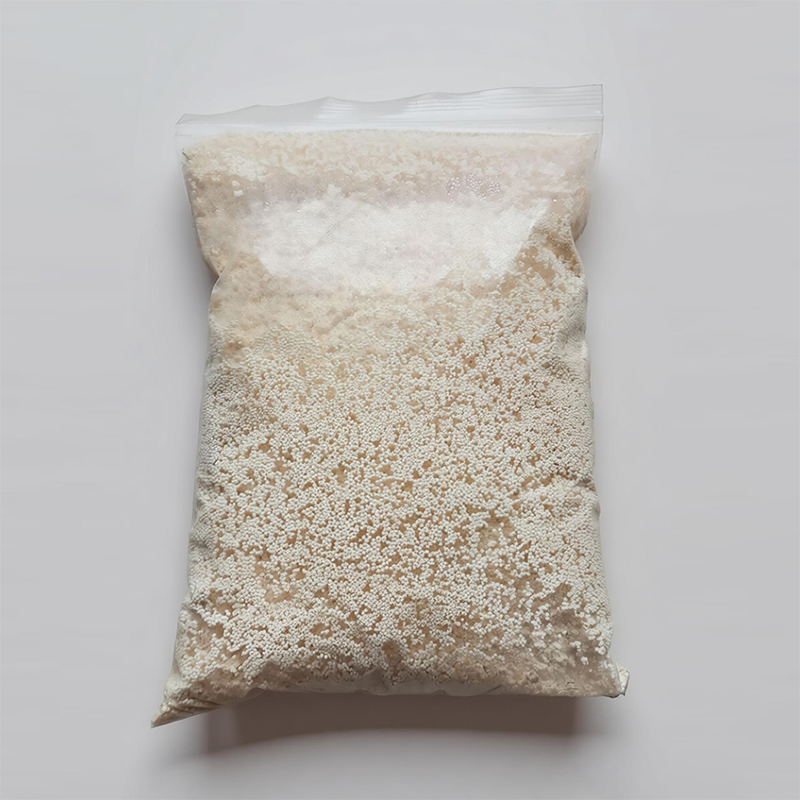
D113 Macroporous Weak Acid Cation Exchange Resin (For Salt Lake Lithium Extraction)

Product Overview

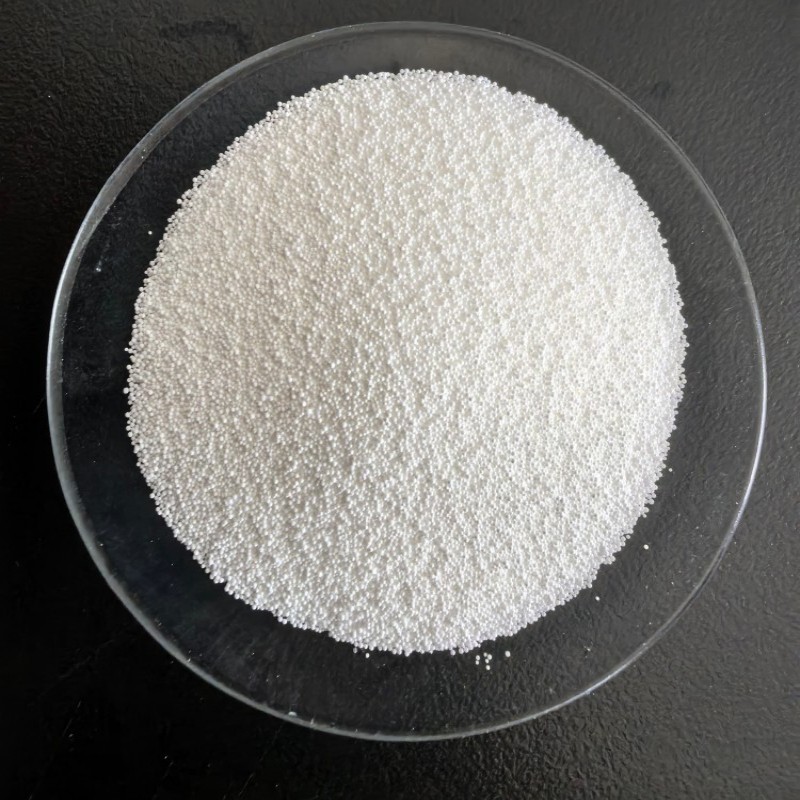
D113 is a premium-grade macroporous weakly acidic cation exchange resin with carboxylic acid functional groups (-COOH) on a crosslinked acrylic copolymer matrix. It is supplied in hydrogen (H⁺) form as moist, uniform, spherical beads, featuring high exchange capacity, excellent mechanical strength, good chemical stability, fast ion exchange kinetics, and low volume change during conversion. It is widely used in salt lake brine lithium extraction for pre-purification (removing Ca²⁺, Mg²⁺, and other divalent cations) and auxiliary lithium enrichment, matching international equivalents: Amberlite IRC-93, Lewatit CN-80, Purolite C104E.

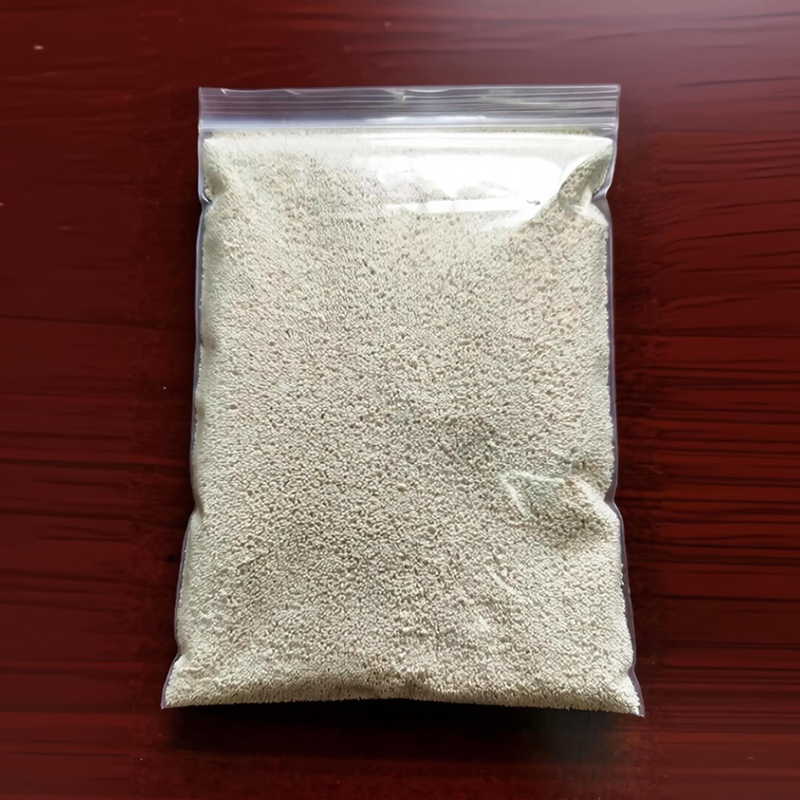
D113 Macroporous Weak Acid Cation Exchange Resin (For Salt Lake Lithium Extraction)

Core Physical & Chemical Properties

Parameter

Specification

Polymer Matrix

Acrylic crosslinked with divinylbenzene (DVB)

Appearance

Milky white/light yellow opaque spherical beads

Functional Group

Carboxylic acid (-COOH)

Shipping Form

Hydrogen (H⁺) form

Total Exchange Capacity (wet, H⁺ form)

≥ 4.2 eq/L (≥ 1000 mmol/L at 25°C)

Working Exchange Capacity

≥ 1600 mmol/L (wet)

Moisture Content (H⁺ form)

45–55%

Particle Size

0.315–1.25 mm (≥ 95% whole beads)

pH Range

4–14

Max Operating Temperature (H⁺ form)

≤ 100°C

Swelling Rate (H⁺→Na⁺)

≤ 70%

Mechanical Strength

≥ 95% (bead integrity)

Key Advantages for Salt Lake Lithium Extraction

Applications in Salt Lake Lithium Extraction

Brine Pre-Purification:

Primary removal of Ca²⁺, Mg²⁺, and heavy metal cations to protect downstream lithiumselective resins/adsorbents and improve lithium purity.

Auxiliary Lithium Enrichment:

Synergistic use with lithium-specific chelating resins (e.g., D401-II, RTL-91) to enhance total lithium recovery from low-grade brines.

Brine Dealkalization:

Removes bicarbonates/carbonates, adjusting brine pH to optimize lithium adsorption efficiency.

Wastewater Recycling:

Recovers lithium from process effluents, reducing resource loss and environmental impact.

Operating Guidelines for Salt Lake Brine

1. Pre-Treatment: Filter brine to remove suspended solids (≤ 1 μm) to prevent resin pore blockage.

2. Adsorption: Flow rate = 4–6 BV/h (bed volume/hour); optimal pH = 6–9; run until Ca/Mg breakthrough.

3. Regeneration: Use 3–5% HCl or H₂SO₄; flow rate = 2–4 BV/h; contact time = 30–50 min; regenerant dosage = 120–150% of theoretical capacity.

4. Rinsing: Fast rinse with demineralized water (6–8 BV) to remove residual acid; slow rinse until effluent pH = 5–7.

5. Storage: Keep moist; temperature ≥ 0°C; avoid freezing and direct sunlight.


Packaging & Storage

· Packaging: 25 kg/drum (PE lined) or 1000 L IBC tote.

· Storage: Cool, dry, ventilated area; avoid contact with strong oxidants.

· Shelf Life: 2 years (unopened, proper storage).


Notes

· D113 is a pre-purification resin for salt-lake lithium extraction, not a lithium-selective adsorbent. It is typically used in series with lithium-specific resins to achieve high-purity lithium recovery.

· Optimize operating parameters (flow rate, regenerant concentration, pH) based on actual brine composition (Mg/Li ratio, salinity) for best performance.

RELATED PRODUCTS

Ready to Innovate? Reach Out to Sky Resin Now

The quickest way to identify the best solution for your needs is to speak with one of our team of experts. We'll be able to quickly narrow down your options and give you objective advice on the best fit.